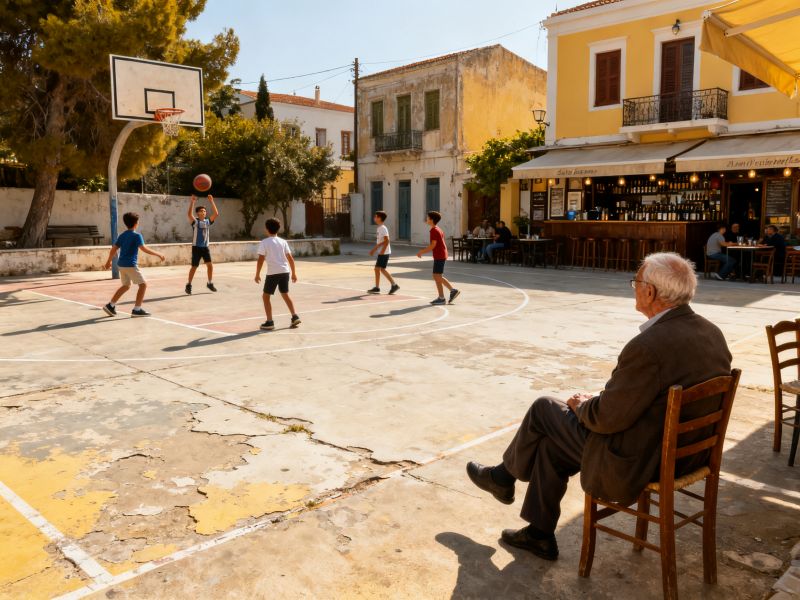
Walk into any Greek village square on a Sunday morning and you'll likely see it: a battered basketball hoop, a couple of kids arguing over a foul, an old man watching from a taverna chair. That's Greek sports in its rawest form—unpolished, argumentative, and deeply social. From the ancient stadiums of Olympia to the concrete courts of Athens' concrete suburbs, athletic culture here has always been less about polished facilities and more about the argument, the sweat。and the bragging rights that follow.The ancient Panhellenic games—Olympia。
Delphi, Nemea, Isthmia—weren't just track meets. They were political theater, religious festivals, and brutal physical contests where a wrestler's broken fingers were a small price for glory. I've stood in the tunnel at ancient Nemea, where athletes once entered the stadium, and the echo of 2,300 years of cheering still feels weirdly present. Modern Greek sports carry that same intensity, just with different uniforms. Football dominates—Panathinaikos vs. Olympiacos is a derby that can shut down entire neighborhoods, with fan culture so fierce it sometimes overshadows the actual match. Basketball matters too;Greece's 2006 FIBA World Championship silver medal, led by Theo Papaloukas and a defense-first mentality, still gets replayed in bars.What strikes me most is how Greek sports thrive on scarcity and improvisation. Public funding is thin。infrastructure uneven. Yet volleyball leagues in islands like Syros and Naxos draw packed gyms, and water polo clubs consistently punch above their weight in European competition. The country's geography helps—coastlines mean sailing and swimming are almost second nature. Greek sailors have won Olympic medals in classes like Finn and 470, and the Aegean's unpredictable winds are the best coach you can get. On the other hand, winter sports barely register outside a few mountain towns. That's not a failure;it's just where the culture puts its energy.Professional Greek sports face real headaches. Match-fixing scandals have hit football。
ownership changes are chaotic, and young talents often leave for richer leagues before they turn 21. But walk into a local boxing gym in Peristeri or a wrestling club in Crete, and you'll see something else: coaches who work day jobs, kids who train after school, parents who bring oranges at halftime. That's the backbone. The Greek Sports system doesn't produce champions through luxury;it produces them through stubbornness. The 2004 Euro football miracle wasn't a fluke—it was eleven players who refused to be intimidated, plus a coach, Otto Rehhagel, who understood that defensive grit can beat stars.So when I hear people dismiss Greek sports as regional or struggling, I think of the old man in the square, watching kids argue over a foul. He's not just watching;he's judging, remembering, and probably placing a small bet with his friend. That's Greek sports—messy, loud, and impossible to ignore. It won't win every medal。
but it will keep producing moments where effort matters more than polish.